The Power & Logic of Fascia
Discover Fascia
Fascia is the continuous web of connective tissue that wraps and links every muscle, bone, nerve, and organ in your body — one single, uninterrupted fabric from head to toe. It gives us shape, transmits force, and carries information faster than we ever imagined. When it's supple and hydrated, we move with ease. When it gets compressed, dry, or stuck, it can pull the whole system out of balance.
Because fascia is one connected system, tension in one area can create pull and change somewhere far away. This is the logic behind fascial work: by releasing and rehydrating the tissue along its natural pathways, we can create a ripple of ease through the entire body. Below are the major fascial lines — the continuous pathways of connective tissue mapped in Thomas Myers' Anatomy Trains.
Feel It — The Stress Reset
A gentle first practice to experience your fascia in motion.
The Fascial Lines
Based on Thomas Myers' Anatomy Trains
These fascial lines represent continuous pathways of connective tissue that run through the body. Understanding them helps illustrate why releasing one area can create change throughout the entire system.
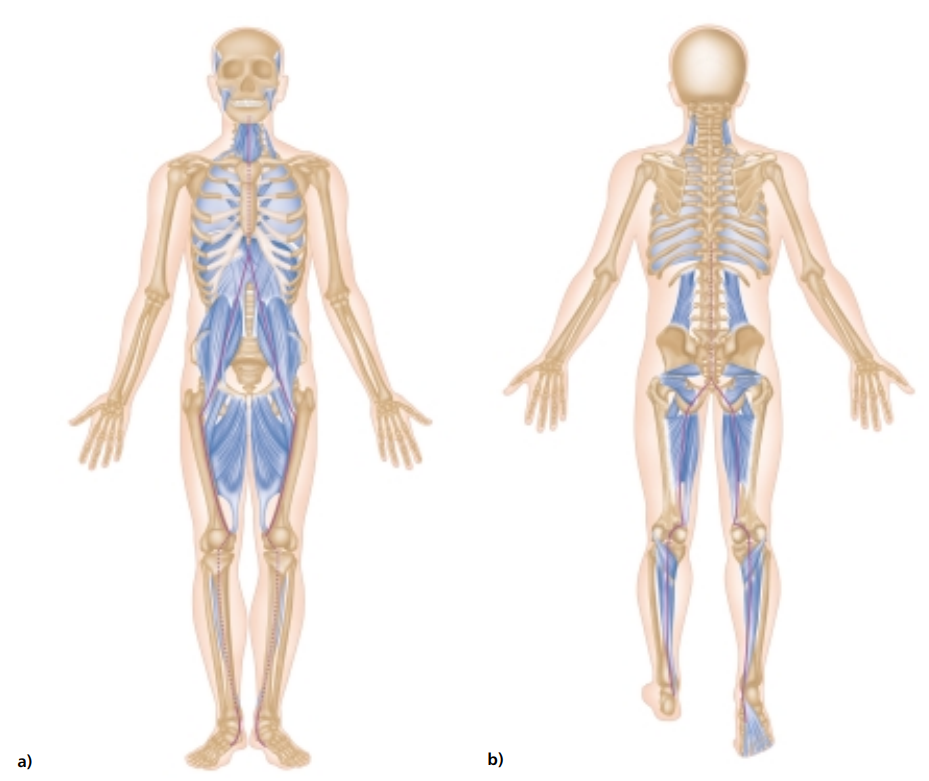
Deep Front Line
The body's core fascial pathway. It runs from the inner arch of the foot, up the inseam of the leg, through the pelvis, along the front of the spine, and up to the base of the skull. Intimately linked to breathing and walking, it connects the diaphragm, psoas, and deep stabilizers.
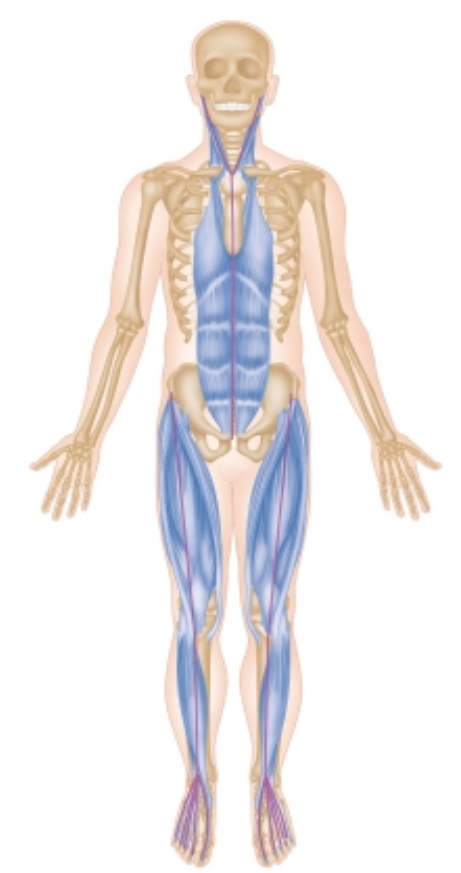
Superficial Front Line
Runs from the tops of the toes, up through the shin, quadriceps, and abdominals, to the skull. It balances the Superficial Back Line and plays a key role in posture — flexing the trunk and hips and extending the knee.
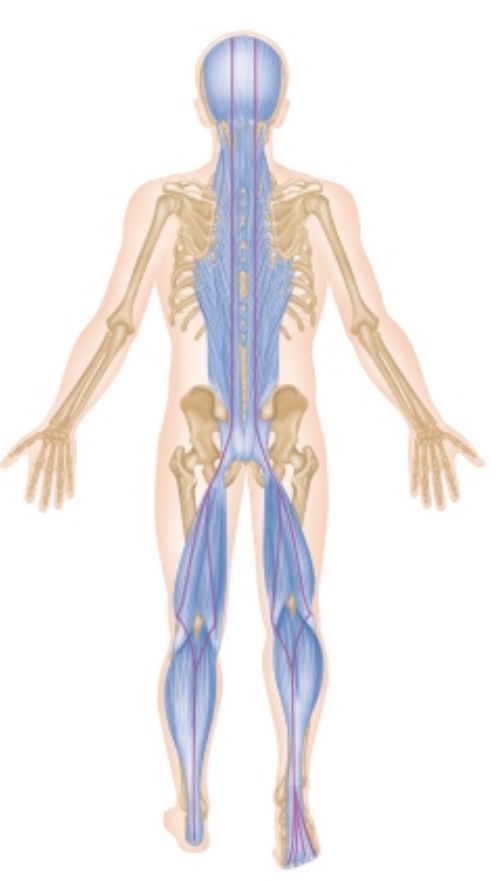
Superficial Back Line
Runs from the bottoms of the toes, around the heel, up the entire back of the body — calves, hamstrings, erector spinae — and over the head to the brow ridge. It supports the body in standing and spans all of the spinal curves.
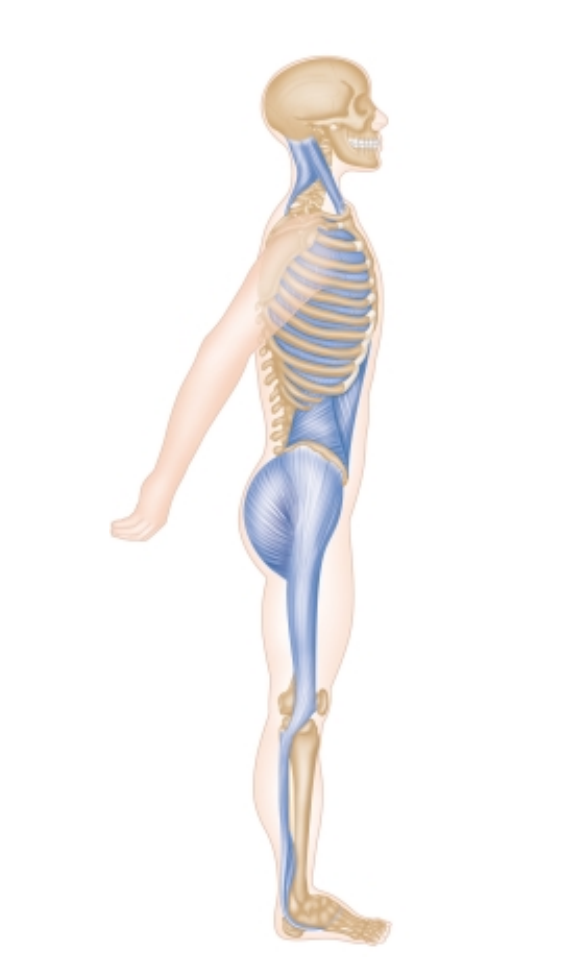
Lateral Line
Runs along each side of the body from the foot, up the outer leg and thigh, along the trunk in a woven pattern, to the skull behind the ear. It acts as a brake for lateral and rotational movements and balances left and right like tent guy-wires.
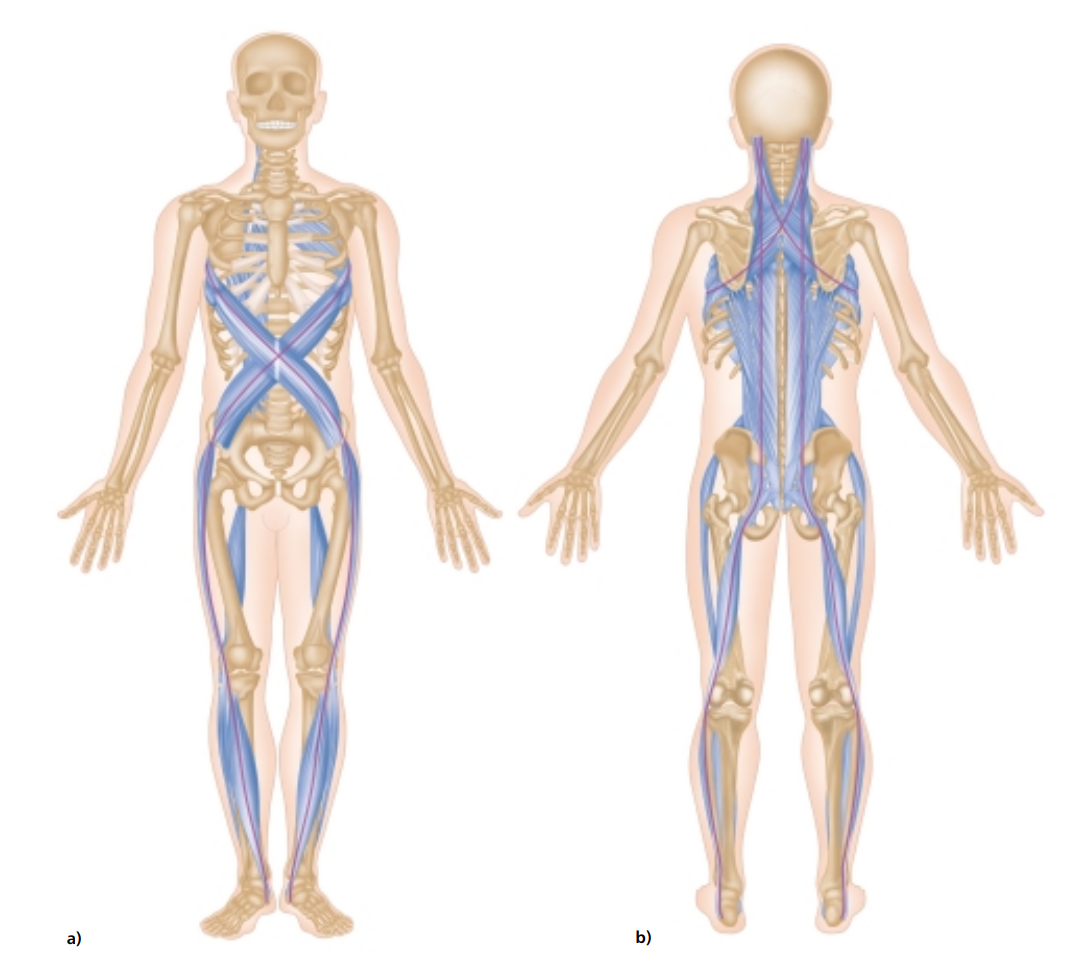
Spiral Line
Winds around the body in a double helix — from the skull, across the back to the opposite shoulder, around the front of the torso, down across the hip, knee, and foot arch, then back again. It mediates rotations and helps maintain balance in all planes of movement.
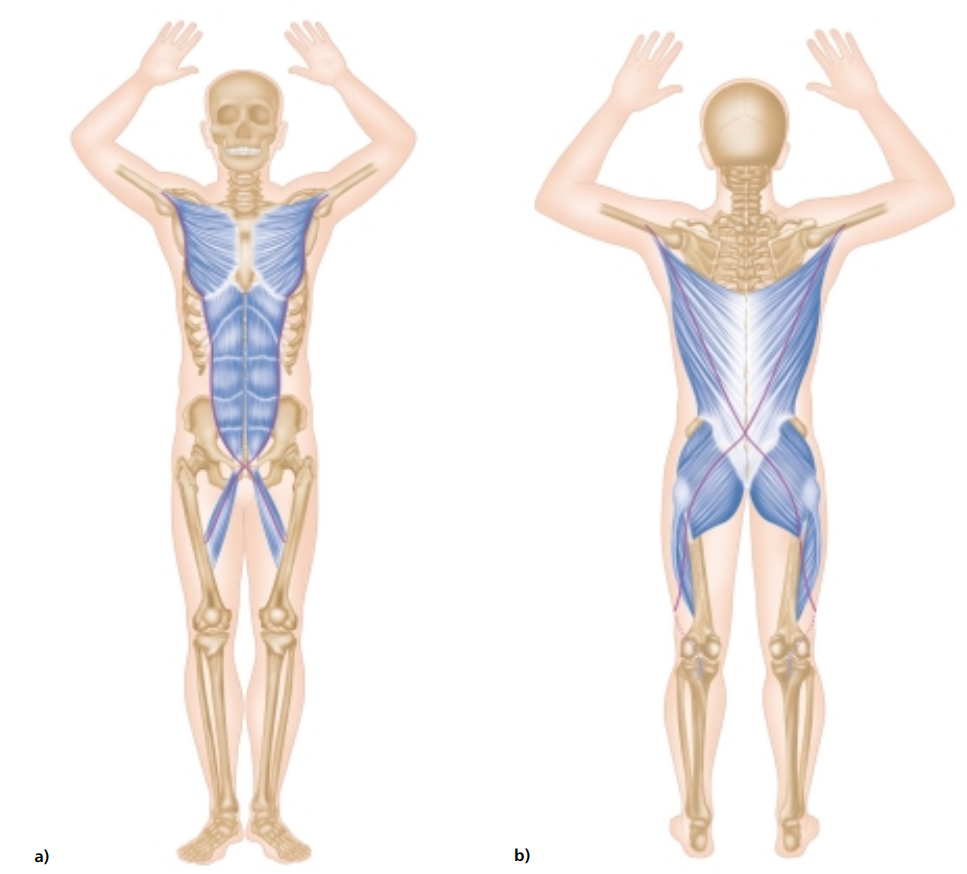
Functional Lines
These lines extend the arm lines across the body surface, connecting them through the trunk to the opposite leg. The front functional line runs from the shoulder across the chest and abdomen to the opposite hip. The back functional line crosses from the shoulder, down the back, through the glutes to the opposite leg. They are essential for powerful, coordinated movements like throwing, reaching, and walking.
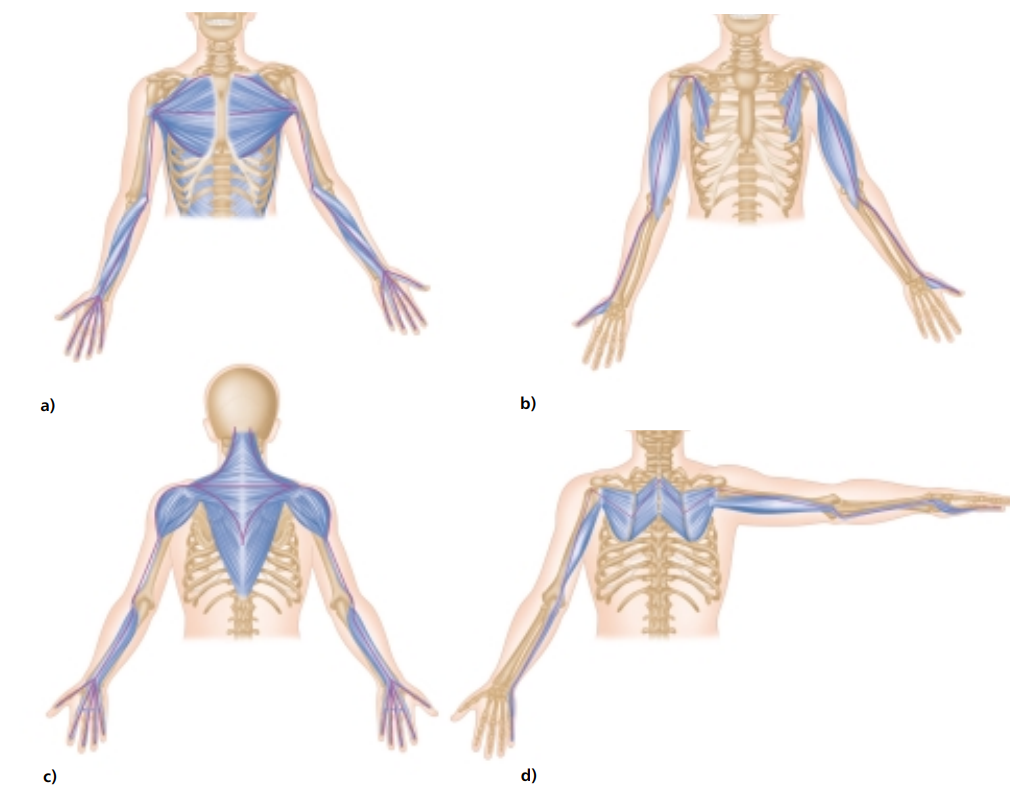
Arm Lines
Four distinct fascial lines run from the chest, shoulder, and spine through the arms to the fingers. They include the deep and superficial front arm lines, and the deep and superficial back arm lines. These lines connect the hands and arms to the ribcage and spine, influencing grip strength, shoulder stability, and the integration of upper body movement.
Go Deeper — Fascia & How to Program the Body
A keynote from Jason, a founder of Human Garage. Want to dive a little deeper into the power of fascia? Watch and experience this talk.
Ways to Experience This Work
Two hands-on and movement-based offerings with Jill.
Ready to feel it for yourself?
Experience fascial work through gentle, guided practices in the 28 Day Unwind — waking up your tissue, freeing your movement, and restoring flow through the whole body.
Explore the Stress Reset